GSM Guide for Mattress Ticking Fabric: How Weight Affects Durability, Feel, and Cost
GSM, or grams per square metre, measures how much a mattress ticking fabric weighs and indicates its density. Lighter ticking around 120 to 160 GSM suits cost-sensitive, breathable applications, mid-range ticking around 160 to 220 GSM covers most retail mattress borders and panels, and heavier ticking above 220 GSM is used where durability and a substantial hand feel matter more than cost. Higher GSM generally costs more and resists wear better, but weave quality and fibre type affect the outcome as much as the number itself.
GSM is one of the first specifications a mattress brand has to lock down when briefing a mill, and it is also one of the most commonly misunderstood. Part of the confusion comes from the fact that GSM gets used loosely across the mattress industry to describe several different things. A topper’s filling density is sometimes quoted in GSM. A quilted comfort layer’s batting weight is sometimes quoted in GSM. This guide is specifically about the ticking fabric itself, the woven or knitted cover that wraps the mattress, and what its GSM actually tells a sourcing team.
What GSM measures, and how it is actually tested
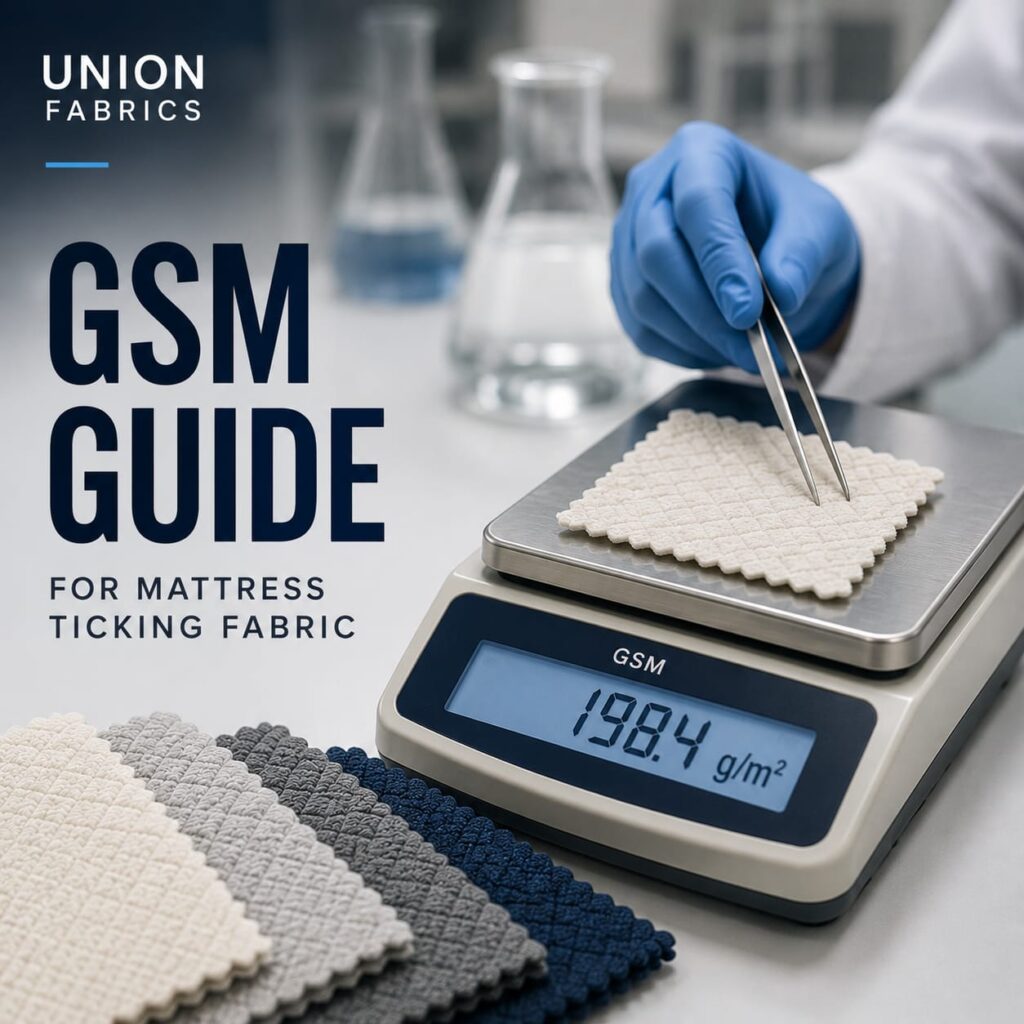
GSM stands for grams per square metre. A lab cuts a precisely sized swatch of fabric, often using a calibrated circular die to punch out a standard area, weighs it on a precision balance, and scales the result up to a one metre by one metre equivalent. The relevant testing standards, including ISO 3801 and ASTM D3776, exist specifically because GSM is only a useful number when it is measured consistently. A figure quoted from an uncontrolled swatch, cut by hand at an inconsistent size, is not comparable to a figure from a properly controlled lab test, even if both are reported as the same unit.
This matters more in supplier conversations than it might seem. Two mills can quote what looks like the same GSM for what turns out to be a noticeably different fabric once samples arrive, because the way the number was generated was not equivalent.
Why GSM alone does not tell the whole story
A common mistake among buyers newer to fabric sourcing is treating GSM as a standalone quality score, where higher always means better. It does not work that way. Two ticking fabrics can carry an identical GSM and feel completely different in hand, because fibre type, yarn quality, and weave or knit structure all interact with weight to produce the finished fabric’s actual performance. A heavier polyester blend at 200 GSM can feel stiffer and less premium than a well-constructed 180 GSM cotton ticking with a tighter weave and better fibre quality.
This is why an experienced product development team asks for more than a GSM figure when evaluating a new fabric. They ask what fibre blend produces that weight, what weave or knit construction is being used, and how the fabric performs on durability testing, because GSM by itself only describes density, not the quality of what was woven or knitted to reach it.
Typical GSM ranges and what they are actually used for
Lighter mattress ticking, generally in the range of 120 to 160 GSM, tends to suit applications where breathability and cost matter more than maximum durability. This range shows up on lower-cost mattress constructions and on fabric used for components other than the primary wear surface, where the cost savings of a lighter fabric outweigh a modest reduction in long-term durability.
The 160 to 220 GSM range covers the bulk of mid-market retail mattress ticking, where brands need a fabric substantial enough to feel premium on a showroom floor and durable enough to withstand years of normal household use, without paying for performance the product does not need. Most standard innerspring and hybrid mattress panels fall somewhere in this range.
Above roughly 220 GSM, ticking starts moving into heavier, more structured territory, often paired with denser weaves and used where a brand wants a noticeably substantial hand feel, or where the fabric needs to withstand more demanding conditions, such as hospitality and healthcare bedding subjected to frequent commercial laundering rather than typical residential washing.
How GSM connects to cost
Heavier fabric requires more raw fibre per metre produced, so GSM is one of the more direct cost drivers in a ticking fabric quote, alongside fibre type, weave complexity, and finishing. A brand specifying 220 GSM when 170 GSM would have met the product’s actual durability requirement is paying for weight the mattress does not need, which adds up meaningfully across a large production run.
This is also where the relationship between GSM and durability becomes a genuine sourcing decision rather than a simple rule. Buying the lightest fabric that meets the required durability standard for the product’s price point and expected use case is usually the more disciplined sourcing decision than defaulting to the heaviest available option as a proxy for quality.
Matching GSM to construction and end use
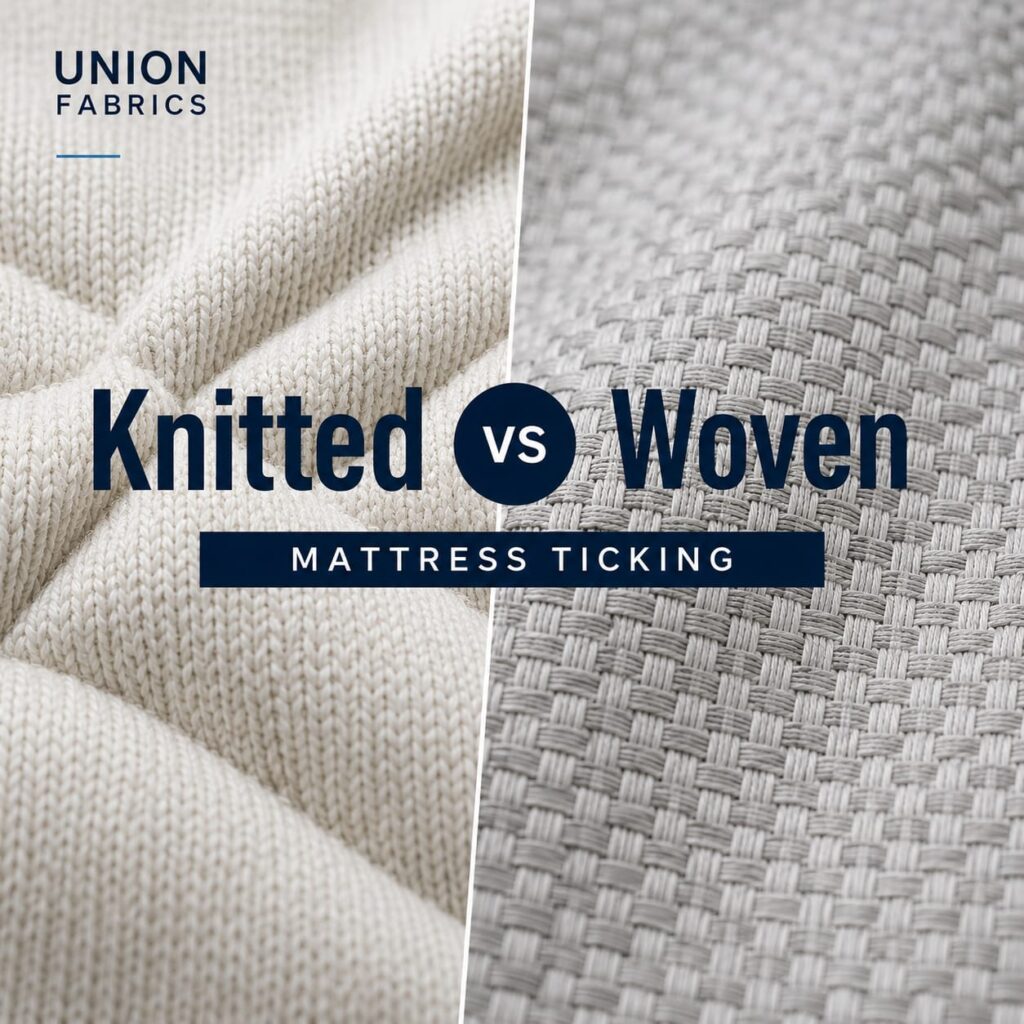
The right GSM depends heavily on where the fabric sits on the finished mattress and what kind of mattress it is going on. A border panel on a traditional innerspring mattress experiences different mechanical stress than a knitted top panel stretched over a foam comfort layer on a hybrid mattress, and the appropriate GSM for each can reasonably differ even within the same product.
Buyers sourcing for mattress-in-a-box production also need to factor in how GSM interacts with compression packing. A heavier, denser woven fabric can behave differently under vacuum compression than a lighter knitted fabric of similar GSM, which is one more reason GSM should be discussed in the context of the specific construction and end use rather than requested as an isolated number on a spec sheet.
What to ask a mill once you have a target GSM
Once a sourcing team has settled on a target GSM range, the more useful next conversation with a mill is not about the number itself but about how consistently the mill can hold that weight across a full production run. Variance in GSM from roll to roll, often caused by inconsistent yarn tension or finishing, is a quieter quality problem than an outright defect, but it shows up later as inconsistent hand feel or drape across a finished batch of mattresses that were supposed to be identical.
Asking how a mill measures and documents GSM consistency, not just what GSM figure appears on the spec sheet, is usually a better indicator of whether a supplier understands fabric weight as a controlled production variable rather than a marketing number.
If you are specifying ticking for a new product line and want to feel the practical difference between GSM ranges before committing to a spec, we can put together a reference swatch card spanning our common ticking weights so your team can compare hand feel and drape side by side.
Frequently Asked Questions
What is a good GSM for mattress ticking fabric?
Most mid-market retail mattress ticking falls between 160 and 220 GSM, which balances a substantial hand feel with reasonable cost. The right figure depends on the mattress construction, the panel’s location, and how the finished product will be used.
Does higher GSM always mean better quality mattress fabric?
No. GSM measures weight and density, not overall quality. Fibre type, yarn quality, and weave or knit construction all affect how a fabric performs and feels, so a well-made lighter fabric can outperform a poorly constructed heavier one.
How is fabric GSM actually measured?
A precisely sized swatch is cut using a calibrated die, weighed on a precision balance, and the result is scaled to a one metre by one metre equivalent, following testing standards such as ISO 3801 or ASTM D3776 to ensure the figure is comparable across suppliers.
Why do two fabrics with the same GSM feel different?
GSM only measures weight per area. Fibre type, yarn denier, and the specific weave or knit structure all shape how a fabric feels and performs, so identical GSM figures can describe noticeably different fabrics.
Does GSM affect the cost of mattress ticking fabric?
Yes. Heavier fabric requires more raw fibre per metre, making GSM one of the more direct cost drivers in a ticking quote, alongside fibre type, weave complexity, and finishing processes.