How Mattress Brands Evaluate Mattress Ticking Suppliers Before Placing Large Production Orders
Mattress brands evaluate ticking suppliers by checking production capacity and vertical integration first, then verifying certifications independently, reviewing defect-rate standards, testing sampling speed, and discussing MOQ flexibility. Price is compared only after a mill has cleared these checks, since an unreliable supplier costs more in delays and rework than a cheaper quote saves.
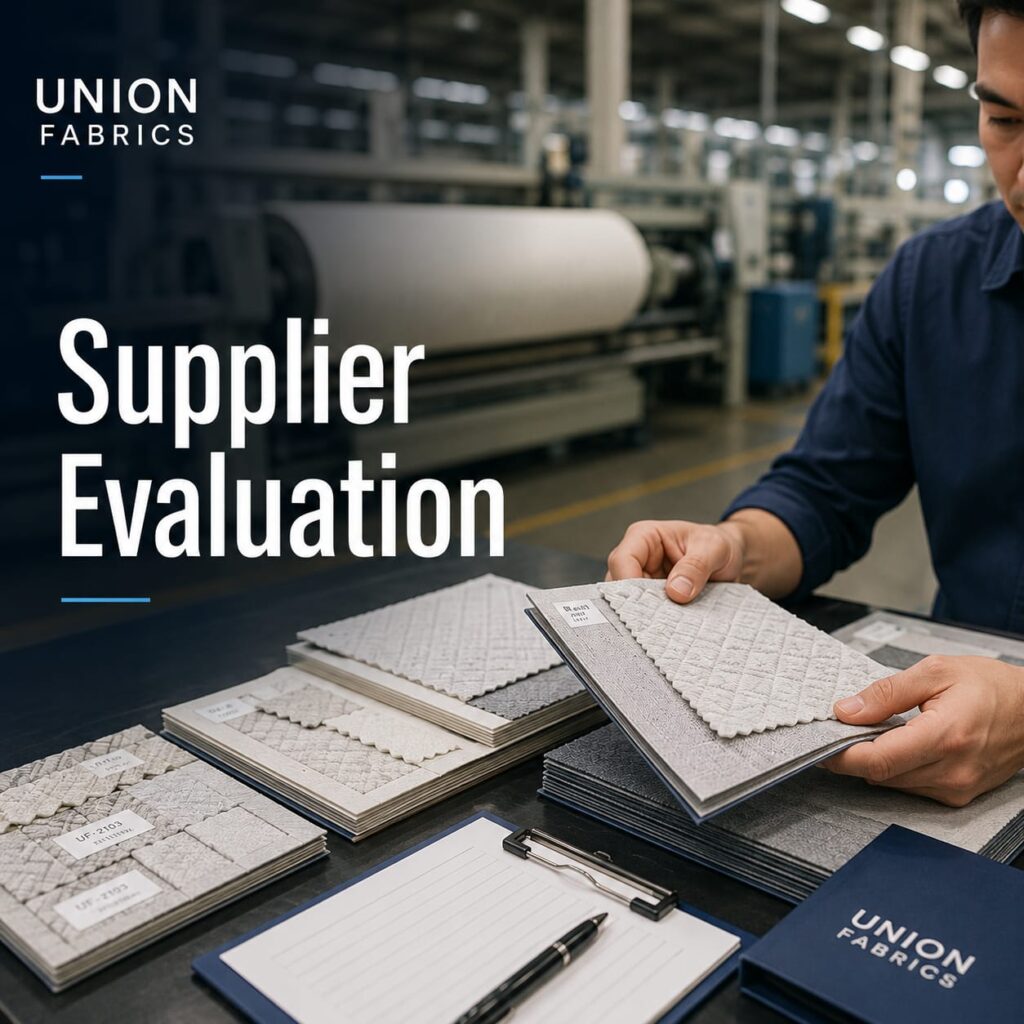
Most mattress brands do not choose a ticking supplier on price alone. By the time a brand is ready to place a six-figure-meter order, price has already been roughly benchmarked across two or three mills. What actually separates the supplier who wins the order from the ones who get a polite no is whether the brand trusts that the fabric arriving in container twelve will match the fabric approved in the original sample. That trust is built through a fairly specific evaluation process, and understanding it helps explain why some sourcing relationships last fifteen years and others fall apart after one bad batch.
What buyers actually check first
The first filter is rarely fabric quality. It is capacity. A procurement manager who has been burned before will ask a mill to walk through its production line before discussing thread count or GSM. They want to know how many looms are running, what percentage of capacity is already committed to existing clients, and whether a new order of the size they are planning would be squeezed into spare time on the line or given dedicated production slots.
This is where vague answers cost suppliers the deal. A mill that can say its weaving unit runs more than ten million metres a month across several hundred air-jet looms gives a buyer something concrete to model against their own volume. A mill that says it has plenty of capacity without a number invites the buyer to assume the opposite.
Vertical integration as a risk signal, not a marketing line
Buyers care about vertical integration because it answers a question they cannot ask directly without sounding rude: how many places can this order go wrong before it reaches me. A mill that weaves the greige fabric, dyes it, finishes it, and stitches the final mattress cover under one roof has fewer handoff points than one that subcontracts dyeing to a neighboring facility and lamination to another. Fewer handoffs means fewer chances for a color lot to drift or a delivery date to slip because someone else’s truck was late.
Sourcing managers who have worked with subcontracted supply chains tend to ask pointed questions here. They want to know whether wet processing, finishing, and stitching happen on the same campus, under the same quality team, or whether the mill is coordinating across separate companies with separate incentives. The answer changes how much buffer time a buyer builds into their own production calendar, and it often predicts how a mill will behave the first time something goes wrong.
Certification verification, not certification claims
Every mill claims certifications. Far fewer buyers actually check them, but the ones placing large orders almost always do, because a failed compliance audit at a downstream retailer is a far bigger problem than a slightly higher fabric price. A GOTS license number that can be looked up independently carries more weight in a buyer’s evaluation than a logo on a website. The same goes for OEKO-TEX Class 1, which matters specifically for any fabric that will be in sustained skin contact, and for social compliance audits like Sedex SMETA or BSCI, which retailers increasingly require before they will even list a product.
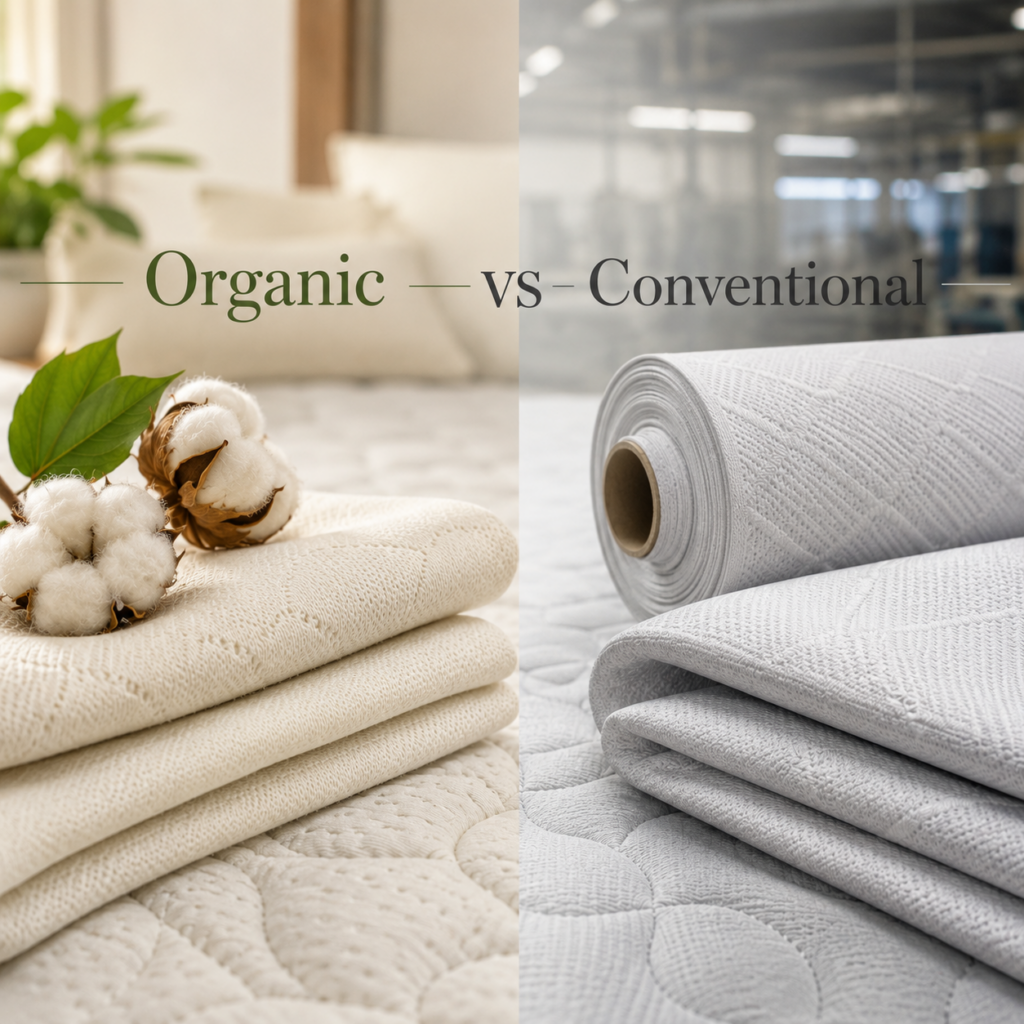
A buyer doing real diligence will ask for the license number, the audit date, and the scope of what was certified. A supplier who can produce that without hesitation has already cleared a hurdle that eliminates a surprising number of competitors. This is also where buyers building a case for GOTS-certified organic mattress fabric tend to dig deepest, since organic claims are among the most commonly overstated in textile sourcing.
How quality is actually measured, not just promised
Two questions tend to separate a mill with a real quality system from one that is hoping for the best, and buyers increasingly ask both in the same conversation rather than treating them as separate topics. The first is about defect tolerance: what acceptable quality limit does the mill work to, expressed against a recognized sampling standard, rather than a flat claim of zero defects that no large-scale weaving operation can credibly promise. A mill running inline inspection during weaving and a second check after finishing is communicating a fundamentally different quality posture than one that inspects only the finished roll.
The second is about what happens when something slips. A mill that quotes a lead time without explaining what is included in that window, whether it assumes dyeing capacity is immediately available, or what happens during peak seasonal demand when several clients want production slots at once, is giving a best-case number rather than a usable one. Buyers who have been burned by an optimistic lead time before will probe for the realistic range, not the marketing figure, because the gap between the two is exactly where production schedules fall apart.
Sampling speed as an early test
Long before a contract is discussed, a buyer is already testing a mill informally through the sampling process. How long does it take to get a swatch back. Does the lab dip match what was promised. Is the courier handled smoothly, or does the sample sit somewhere for two weeks before anyone follows up. A mill that turns around sample yardage in roughly a week and ships it without friction is signaling, intentionally or not, how it will behave once a real production order with real deadlines is in motion.
Buyers rarely say this part out loud, but sourcing managers compare mills informally based on how the sampling experience felt. A slow or disorganized sample request is one of the most common reasons a mill gets quietly dropped before the conversation ever reaches MOQ or pricing.
Minimum order quantities and how they shape the relationship
MOQ conversations reveal more than a number. A buyer testing a new fabric construction for the first time wants to know whether the mill will work with a smaller initial run, even at a less favorable price, in exchange for proving the relationship before committing to full volume. A mill with a rigid, one-size-fits-all MOQ across every construction signals less flexibility than one that can explain why standard constructions allow a lower minimum while a custom jacquard or digital print requires a higher one due to setup costs.
This is also where buyers start to sense whether a mill understands their business model. A brand selling mattress-in-a-box products under heavy compression packing has different fabric stress points than a traditional retail mattress brand, and a mill that asks about end use before quoting MOQ is demonstrating that it is thinking about the product, not just the order.
What this means for choosing a supplier
None of these checks happen in isolation, and no single answer wins or loses a deal on its own. A buyer weighing a large production order is really building a composite picture: can this mill produce at the volume I need, will the fabric I receive in month six match what I approved in month one, can I verify the claims being made to me independently, and will I be told the truth if something goes wrong. Mills that can answer all four clearly, with specific numbers and verifiable certifications rather than reassurance, are the ones that tend to convert a first sample request into a fifteen-year supply relationship.
For a sourcing manager preparing to issue an RFQ, the practical takeaway is to ask these questions early and directly, before fabric quality even enters the conversation. The mills that answer comfortably are usually the ones worth pursuing further.
If you are about to issue an RFQ and want a structured way to compare answers across mills, our supplier evaluation scorecard walks through each of these checkpoints in order, with space to log capacity figures, certification numbers, and quoted lead times side by side for every mill you are considering. Request it alongside your next sample order.
Frequently Asked Questions
What questions should I ask a mattress ticking supplier before placing a large order?
Ask about current production capacity and how much is already committed to other clients, whether dyeing and finishing happen in-house or are subcontracted, the certification license numbers you can verify independently, the acceptable quality limit used for defect inspection, and what the realistic lead time is during peak season versus normal demand.
What is a typical minimum order quantity for mattress ticking fabric?
MOQs usually start around 3,000 metres for standard constructions and rise to 15,000 metres or more for custom jacquard or digital print, since custom designs carry higher setup costs that mills need to recover across a larger run.
How long does it take to get fabric samples from a mattress ticking mill?
Most established mills turn around sample yardage and lab dips within five to seven working days, with samples shipped by courier separately from the bulk production timeline.
Why does vertical integration matter when choosing a fabric supplier?
A vertically integrated mill controls weaving, dyeing, finishing, and stitching under one roof, which removes the handoff points between separate companies where color drift, delays, and accountability gaps most often occur.
How do I verify a supplier’s GOTS or OEKO-TEX certification is genuine?
Ask for the specific license or certificate number and check it against the certifying body’s public database rather than relying on a logo displayed on the supplier’s website.